Sourcing Platform for On Demand Manufacturing
Get fast access to custom parts or turn idle capacity into revenue
- Get a Quote
- Add Machines/Services
- No Obligation
Join our network and become a
Manufacturing Partner
List your machines and services to receive relevant RFQs in
-
3D Scanning
-
Engineering
-
3D Printing
-
CNC & Cutting
-
Surface Treatment
-
Quality Control
Sourcing Platform for On Demand Manufacturing
Get fast access to custom parts or turn idle capacity into revenue
- Get a Quote
- Add Machines/Services
- No Obligation
3D Scanning
3D scanning captures the shape of a physical part and turns it into usable digital data.
If CAD files are missing—or a part is worn, broken, or hard to measure-3D scanning suppliers can create a 3D scan/mesh (and, when needed, a CAD-ready model) to support manufacturing via CNC, 3D printing, or other processes.
Typically a 3D scan file (mesh/point cloud such as STL/OBJ/PLY) and, if required, a CAD-ready model or reference data for engineering.
When CAD files don’t exist, when the part is complex to measure manually, or when a worn/broken component needs to be reproduced accurately.
The physical part (or access to it), key dimensions/tolerances if known, intended use, and whether the output is for inspection, reverse engineering, or direct manufacturing.
Sometimes, especially for 3D printing. For CNC machining, a scan is often used as input for reverse engineering to create a parametric CAD model and proper drawings.
Engineering
Engineering is the step that turns an idea, or a physical part, into production-ready files.
If only a photo, a sketch, or a broken component is available, engineering suppliers can create the CAD model (3D design), drawings, and DFM guidance needed to manufacture the part using the right process (CNC, 3D printing, cutting, etc.).
Typically a CAD file (e.g., STEP), technical drawings (PDF), and guidance on materials and manufacturing method.
When production-ready files are missing, when a design needs optimisation for manufacturing (DFM), or when a part must be recreated from a photo/sketch/physical sample.
Photos from multiple angles, any known dimensions, intended use (loads/environment), preferred material, and whether it’s a prototype or a batch.
Yes. Photos can work for simple geometry, but best accuracy usually comes from a physical sample plus measurements (or 3D scanning), especially for spare parts.


3D Printing
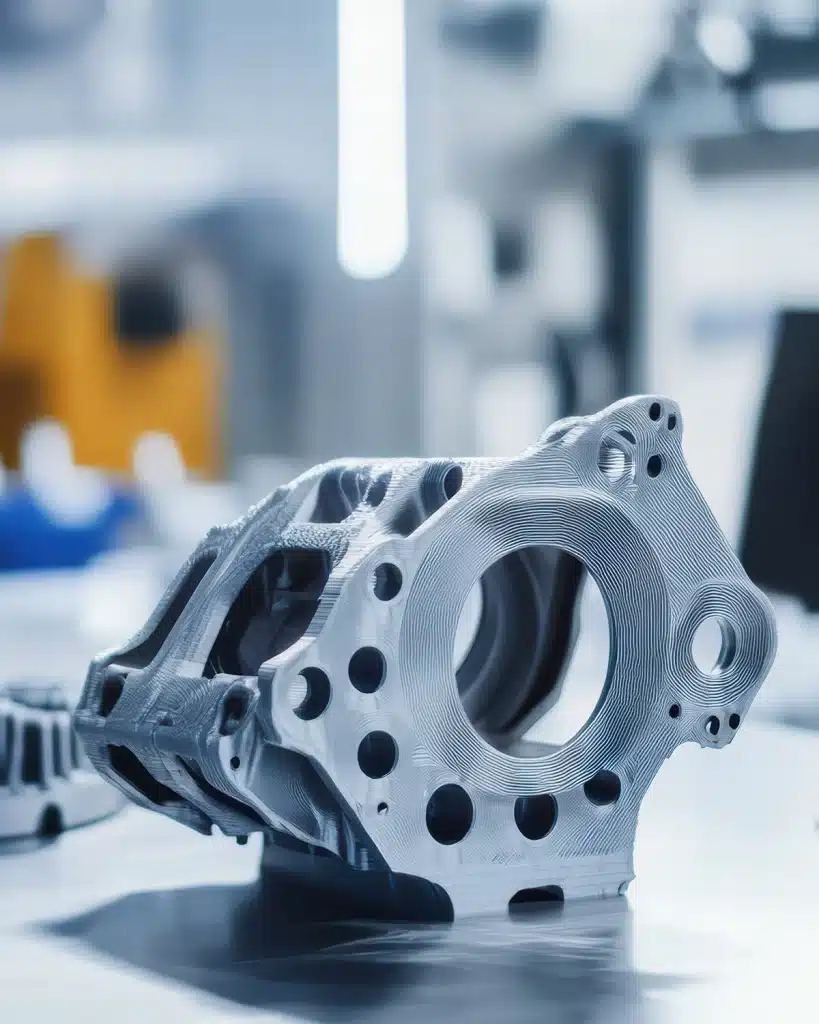
3D printing creates parts directly from a digital model—ideal for prototypes, spare parts, and low-volume production.
By selecting the right process and material, 3D printing suppliers can deliver anything from durable polymer parts to high-performance metal components—often without tooling and with short lead times.
Typically a finished part (or batch), material confirmation, and—when required—basic documentation such as photos, measurements, or a certificate of conformity.
When I need fast prototypes, complex geometry, internal channels, or low-volume production without tooling. CNC is often preferred for very tight tolerances, specific surface finishes, or certain metals at scale.
A 3D file (STL/STEP preferred), quantity, material requirements, target tolerances, and intended use (load, temperature, environment). If I don’t have a CAD file, engineering support can help create one.
Depending on the supplier and process, options typically include polymers (e.g., PLA/PETG/ABS/nylon), engineering plastics (e.g., PA, PC, carbon-fibre reinforced), and metals (e.g., steel, aluminium, titanium). Availability and suitability depend on requirements and part geometry.
CNC & Cutting
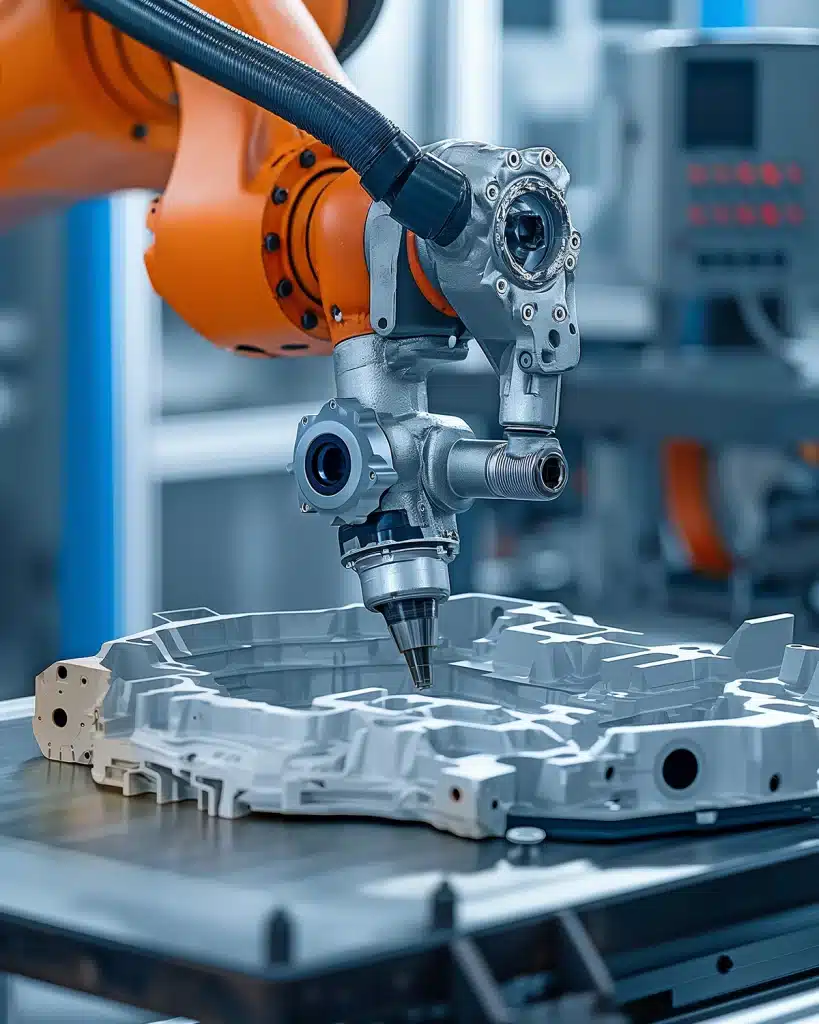
CNC & cutting produce precise parts by machining or cutting material to shape—ideal for functional components, brackets, fixtures, and low-to-mid volume production.
By matching requirements to the right machines and processes, CNC & cutting suppliers can deliver parts in metals and plastics with reliable tolerances and repeatability.
Typically a finished machined/cut part (or batch), confirmation of material and tolerances, and—when required—basic documentation such as measurements or a certificate of conformity.
When I need tighter tolerances, specific surface finishes, higher strength from solid stock, or predictable repeatability for batches. 3D printing is often better for complex geometry and fast iterations without machining constraints.
A CAD file (STEP preferred) and/or technical drawing (PDF), quantity, material, tolerance requirements, surface finish needs, and deadline. If I only have a sample or photo, engineering/3D scanning can help create production-ready files.
Yes. Photos can work for simple geometry, but best accuracy usually comes from a physical sample plus measurements (or 3D scanning), especially for spare parts.
Surface treatment
Surface treatment improves a part’s performance after manufacturing—adding protection, durability, and the finish required for real-world use.
Surface treatment suppliers can support processes such as coating, anodising, blasting, polishing, heat treatment, and corrosion protection, depending on material and requirements.
Typically a finished part with the specified coating/finish, and confirmation of the process and specification used (and documentation where required).
When I need improved corrosion resistance, wear resistance, aesthetics, friction control, or a specific surface finish-often to meet functional, environmental, or customer requirements.
The part material, required finish/specification (if known), intended use/environment (e.g., marine, high wear, high temperature), and any masking requirements or critical surfaces.
Depending on supplier and material, common options include anodising, powder coating, painting, plating, polishing, blasting, passivation, and heat treatment. Availability and suitability depend on requirements and geometry.
Quality control
Quality control verifies that parts meet the required dimensions, tolerances, and documentation before delivery.
Suppliers can support inspection and reporting - from basic measurements to CMM inspection and traceability, depending on requirements.
Typically an inspection result (pass/fail), measurement data, and a report (e.g., dimensional report). Certificates or traceability documentation can be included when required.
When tolerances are tight, the part is safety, or mission, critical, the order value is high, or when a customer requires documentation before accepting delivery.
A drawing or specification with tolerances, critical dimensions/features, required standards (if any), and whether the inspection is for first article, batch sampling, or 100% inspection.
Depending on requirement and supplier capability: visual inspection, dimensional checks, CMM measurement, surface roughness checks, material verification, and documentation/traceability.
Join the Network
Ready to get started?
We're dedicated to providing an efficient, secure platform for on-demand manufacturing that empowers businesses to thrive.
Flexible Pricing
Choose your subscription plan
We offer a plan perfectly aligned with your goals, whether you are an early user, a growing manufacturer, or an established enterprise.
Freemium
Essential tools for early users and small manufacturers exploring the platform.
- Up to 3 capacities
- Auto-calculated logistics
- Smart matching & fast payment
Premium
Advanced features for growing manufacturers and sourcing teams.
- Everything in freemium
- Unlimited capacities
- Digital contracts & e-signing
Platinum
Full capabilities for enterprises, OEMs, and regulated sectors.
- Everything in premium
- Full project collaboration tools
- Priority onboarding & support
Team Members
Get to know our team
Thomas Bentzen
CEO & Co-Founder
Economics and industrial manufacturing background with experience in renewable energy. Focus on procurement, project development and scaling industrial tech startups.
James Larsen
CTO & Co-Founder
Electrical engineering and physics background, specialized in simulations. Former CTO with experience in complex IT systems across regulated and non-regulated sectors.
Oleksandr Kozachuk
CAIO & Co-Founder
20+ years in advanced software development, specializing in AI, big data, and scalable, fault-tolerant systems for mission-critical applications.
Silje Falch
CAO & Co-Founder
BSc in Economics, specialized in digitalization and business development. Startup experience with strengths in project management and team collaboration.
Kristine Valberg
VP of Design
10+ years experience as a Graphic Designer/Entrepreneur in marketplace business. Skilled in creative leadership and coordination. Delivers projects effectively through teamwork.
Kristine Valberg
VP of Design
Electrical engineering and physics background, specialized in simulations. Former CTO with experience in complex IT systems across regulated and non-regulated sectors.
Kristine Valberg
VP of Design
- Phone:+1 (215) 557-1122
- Email:hello@company.com
Newsletter
Don't miss what's next
Sign up to receive our weekly email to discover new guides that will help you accelerate your business.
Our latest
Updates & Highlights
Catch the conferences, workshops, and meet-ups we attend - with short reflections and takeaways along the way.
Ingun Berget joins LOCAT3D as Chair of the Board
We are pleased to share that Ingun Berget has joined LOCAT3D as our new Chair of the Board. With extensive…
Visit to Industrial AM
This week, we welcomed our incoming Chair of the Board, Ingun Berget, and took the opportunity to visit Industrial AM…
Space Tech Expo Europe
From the Norwegian Pavilion at Space Tech Expo Europe in Bremen: conversations on how local, on-demand manufacturing can strengthen space,…
A NATO DIANA milestone
LOCAT3D shared a key milestone from our NATO DIANA process during NorBAN’s Startup Spotlight in Oslo and why it matters…
Pre-Seed Kick-Off at NorBAN x Bull Startup Spotlight
On 7 October, LOCAT3D kicked off its pre-seed round at NorBAN x Advokatfirmaet Bull’s Startup Spotlight – sharing how on-demand…
Visit to Prototal
Our meeting with Prototal | Norway and their representatives Hågen Lynum and Karin Holst at Forsvarskonferansen led to a follow-up…